TPM
Trade Promotion Management
Manage promotional investment

Consumer Goods Route-to-Market Platform
Digital CRM for the consumer goods industry, built to improve efficiency and drive growth.
Make execution connected.


















Data-driven · Smarter decisions
Full visibility
Identify opportunities
Drive growth
Embedded AI · Higher efficiency
Cover key channel processes
Manage promotional investment
Manage channels and inventory
Manage field execution
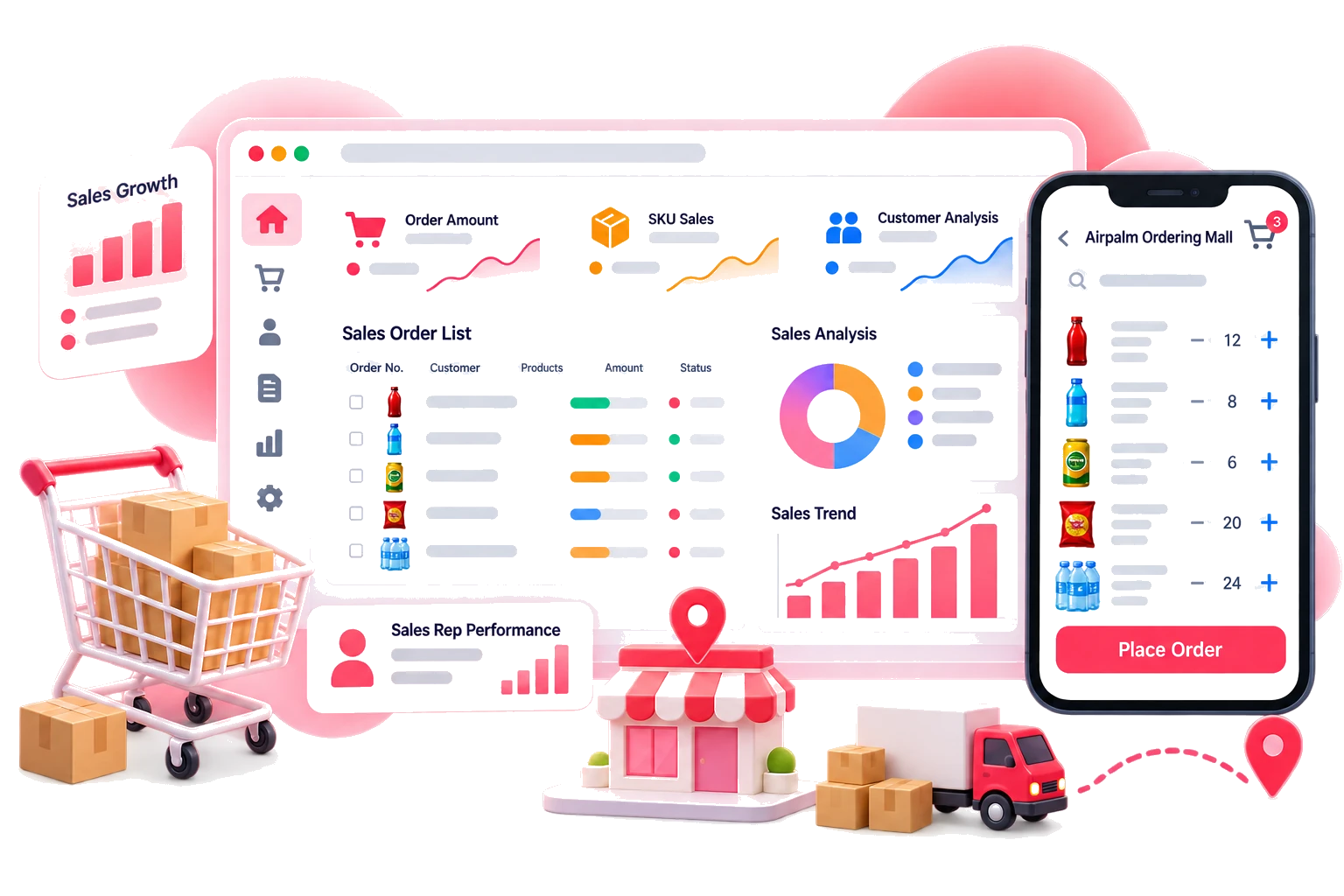
Enable convenient customer purchasing
Manage distributor operations and inventory
Unified data · Flexible expansion
Organization · Permissions · Master Data · Business Objects
App Configuration · Workflow Orchestration · Flexible Expansion
Connect the entire channel operation, drive greater business growth
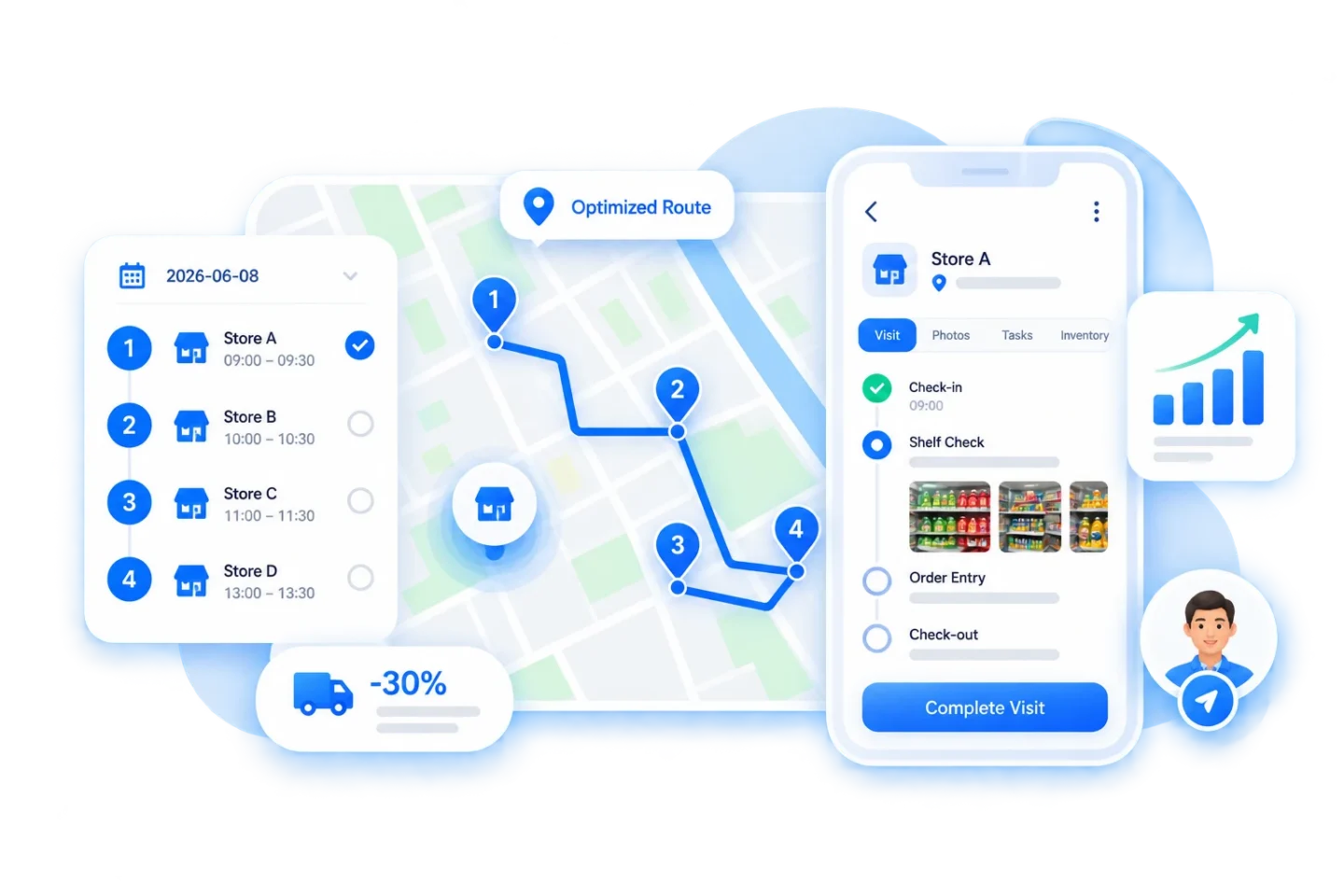
Plan routes, customize visit steps, automate routine tasks, verify execution, and connect field teams across multiple access points.
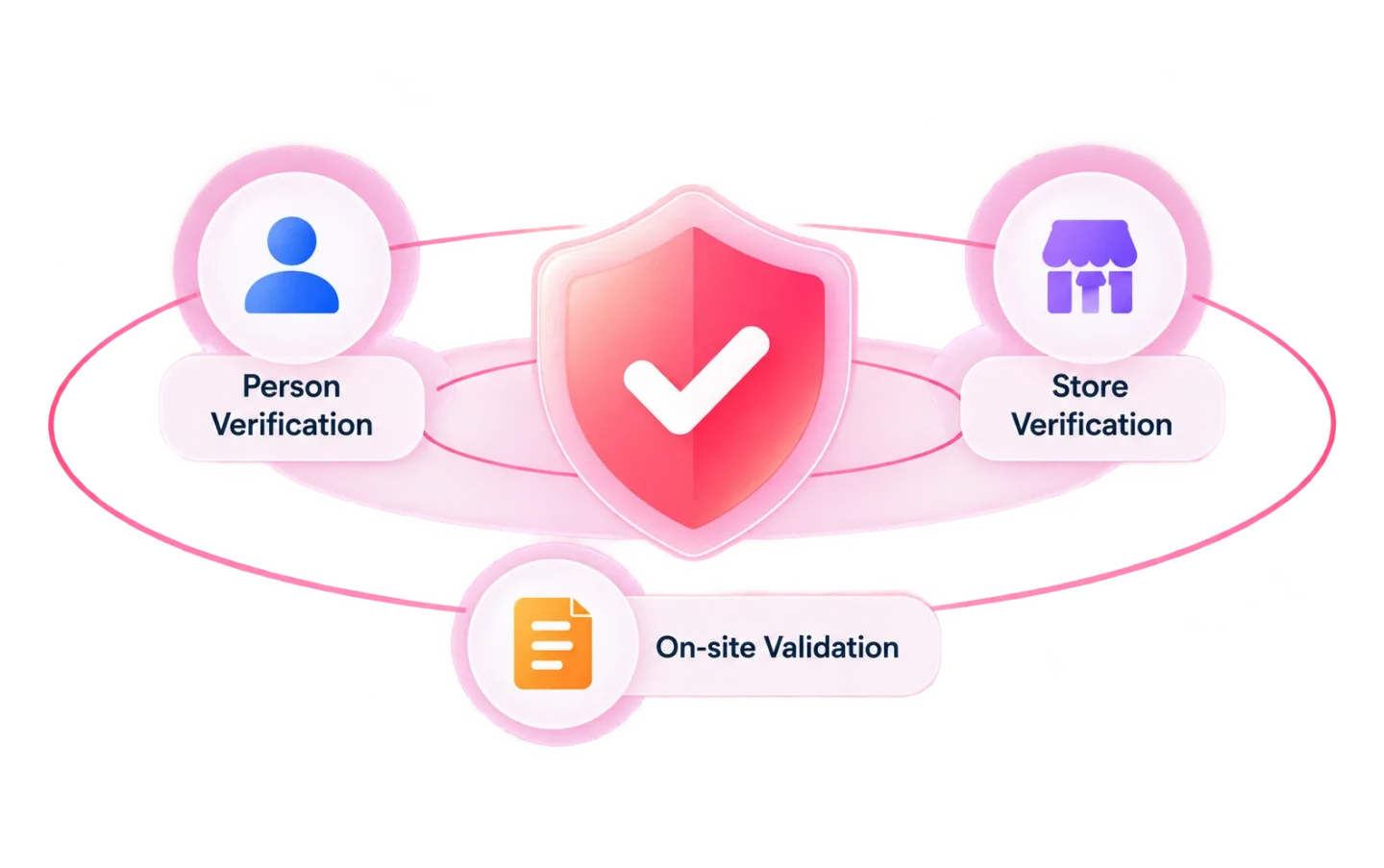
Fraud Detection
Verify people, stores, and on-site activity to reduce remote check-ins, false visits, and inaccurate reporting.
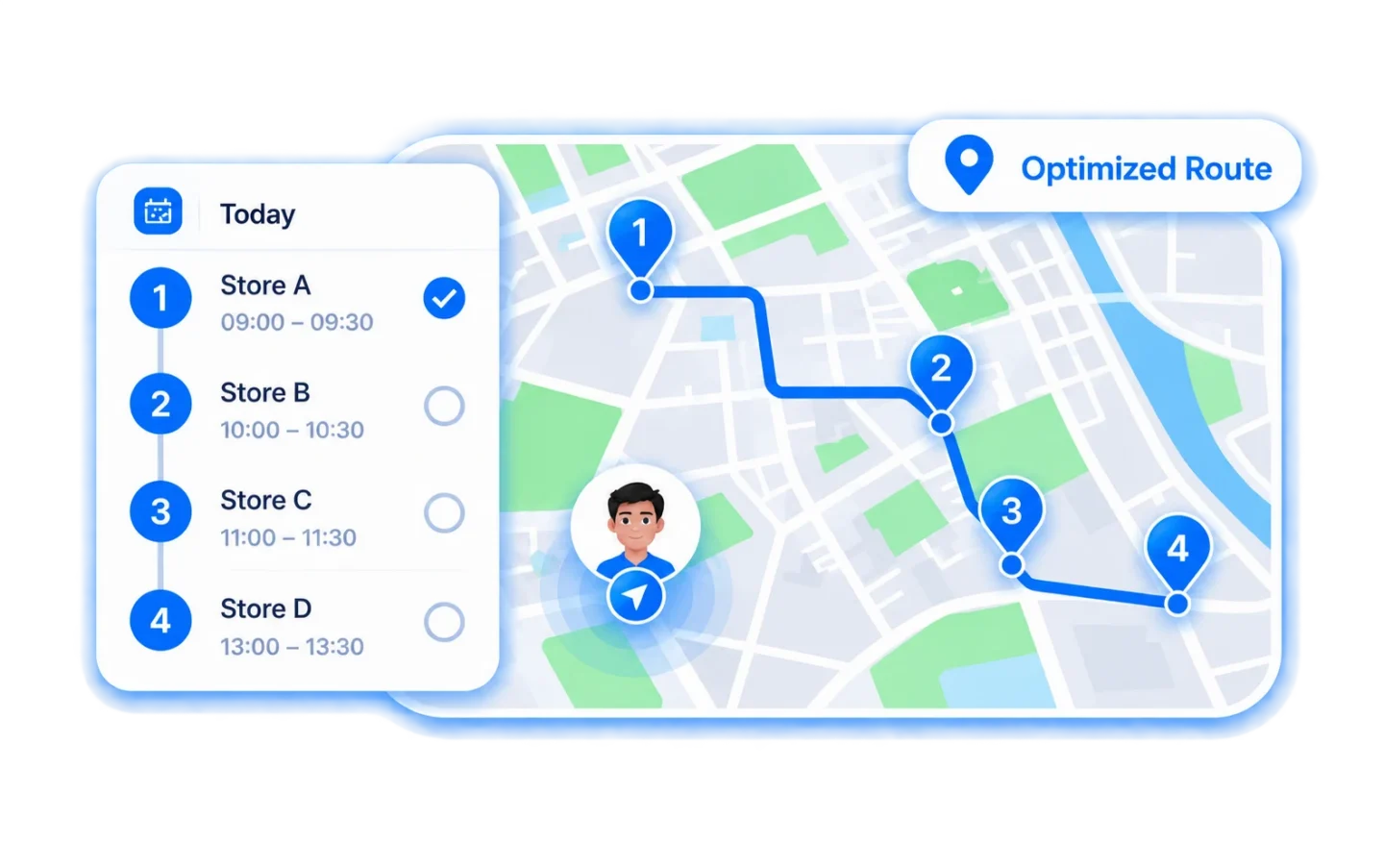
Route Planning
Plan field routes by territory, customer, and visit cycle so reps always know where to go and what to prioritize.
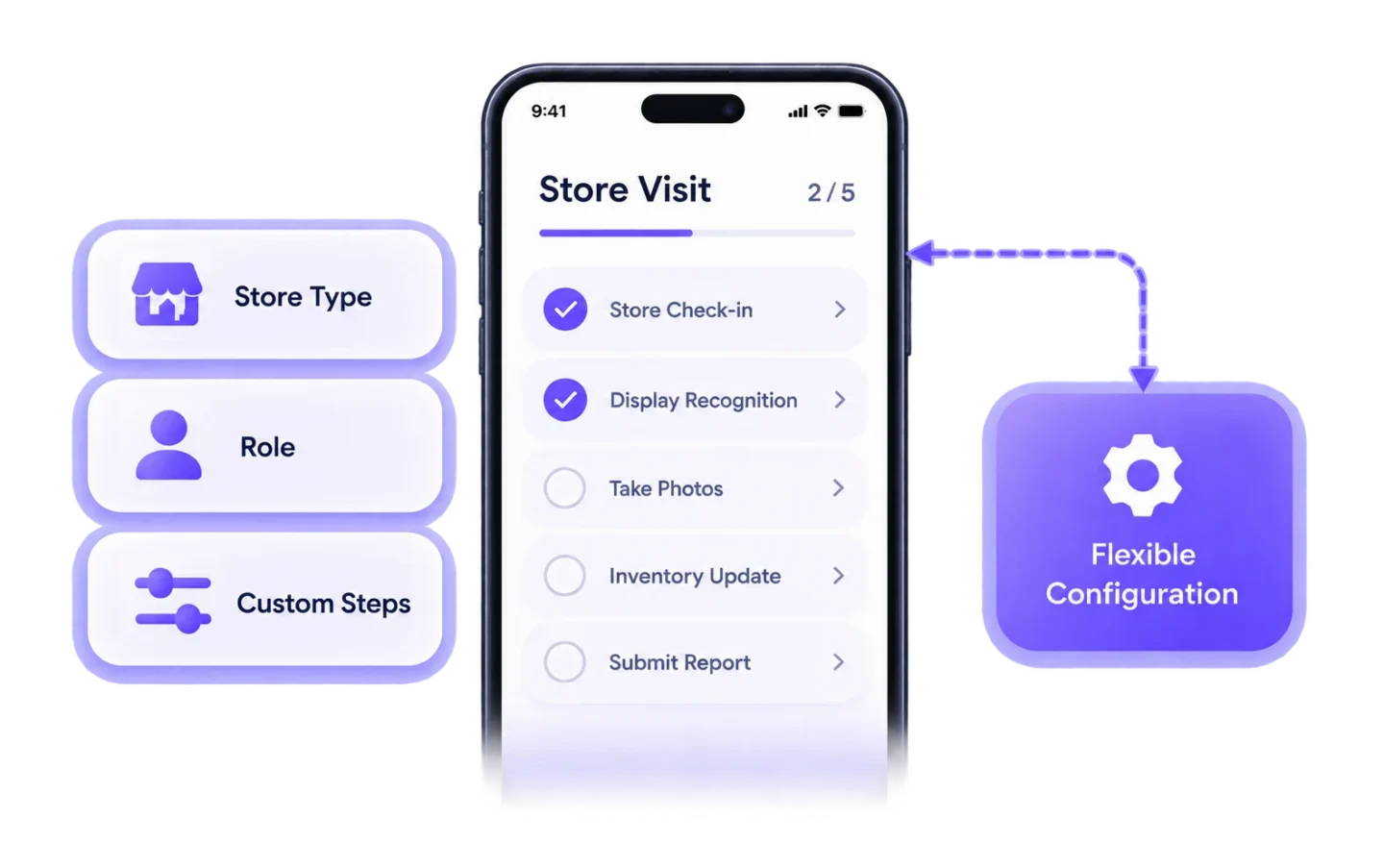
Custom Visit Workflows
Customize visit steps, timing, and key actions by role and store type to keep field execution consistent and relevant.
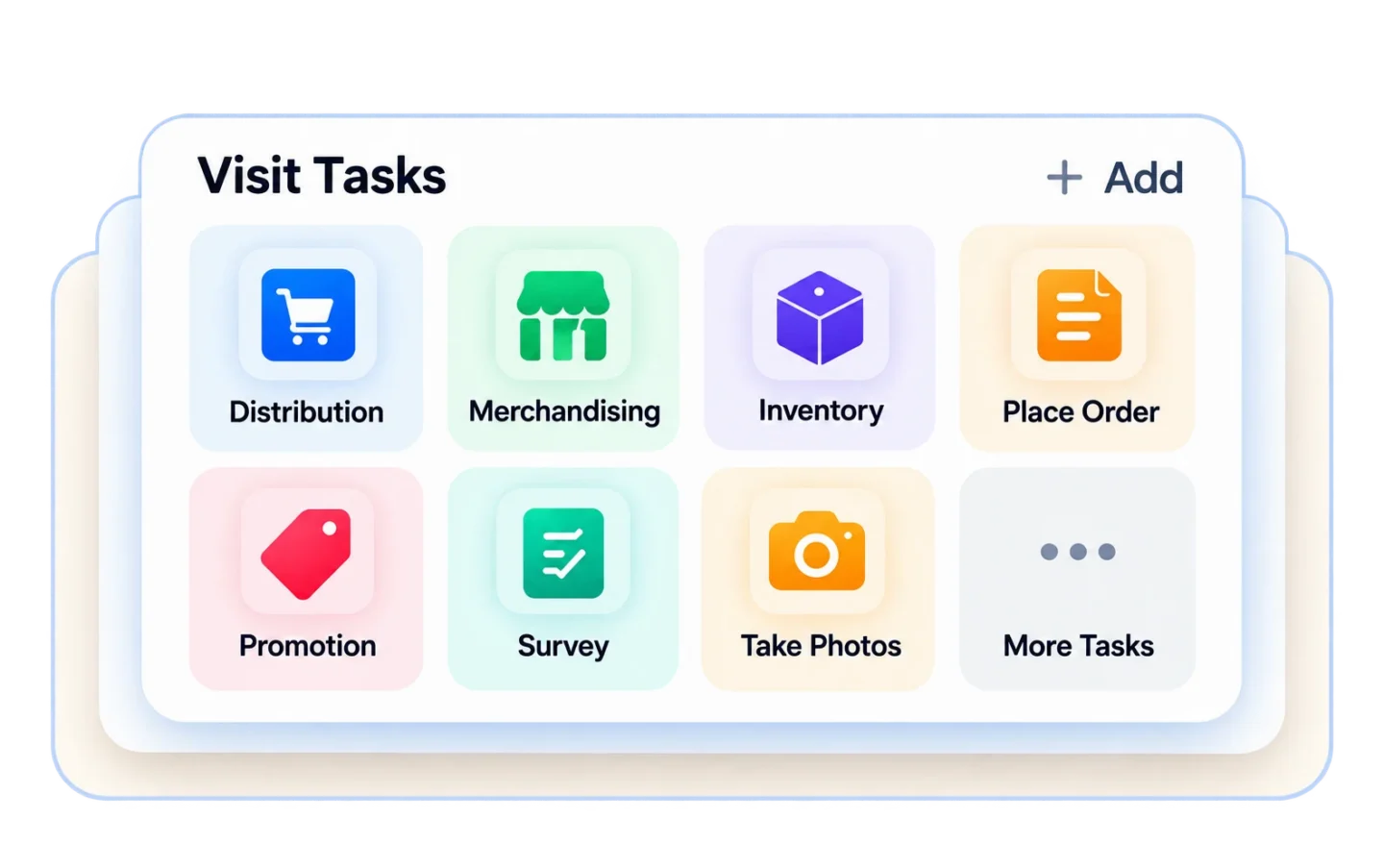
Rich Preset Tasks
Build common tasks like distribution, merchandising, inventory checks, ordering, and promotion execution directly into each visit, so reps can get to work right away.
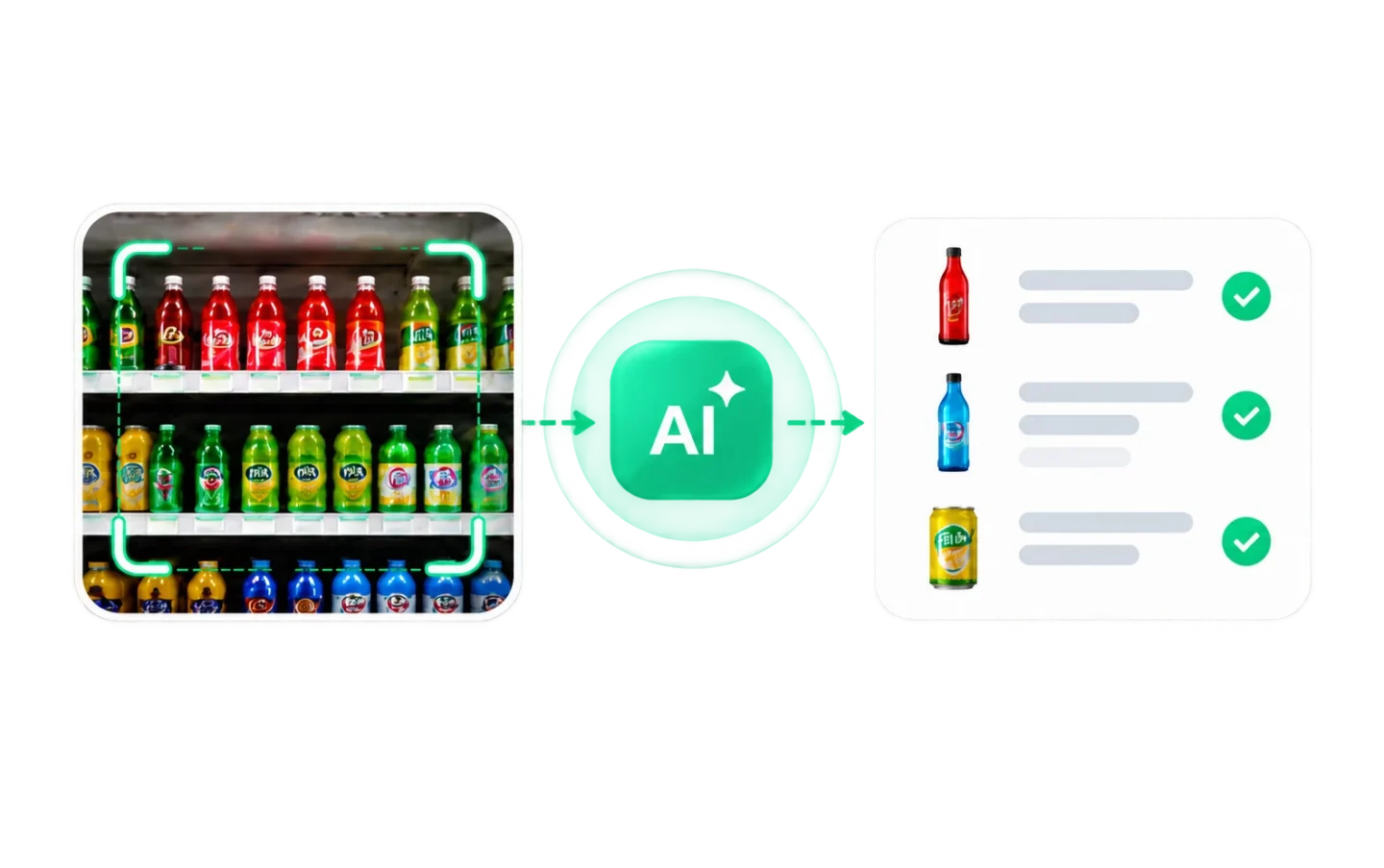
Product Recognition
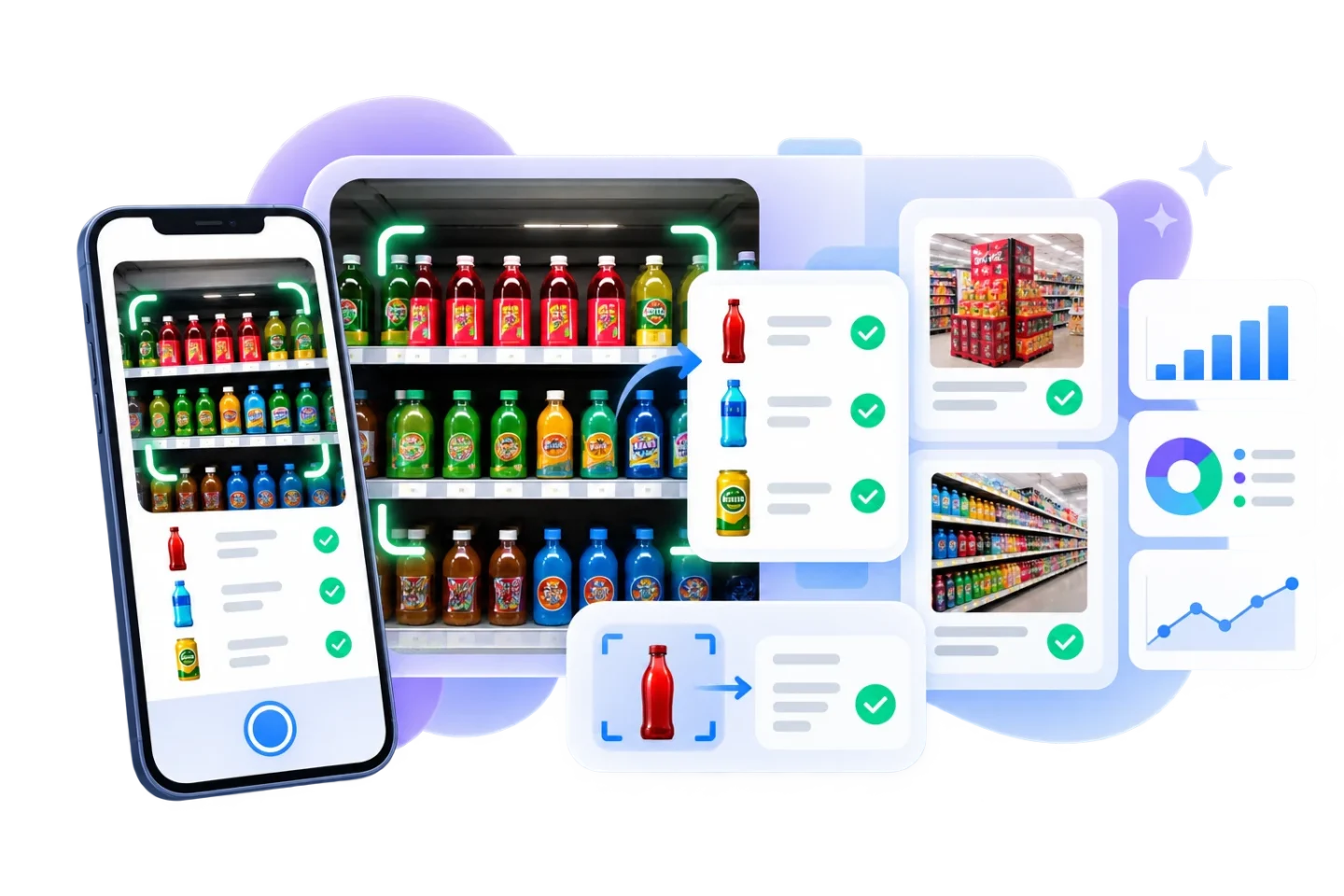
Use AI to recognize products, distribution, and displays from store photos, reducing manual input and speeding up field verification.
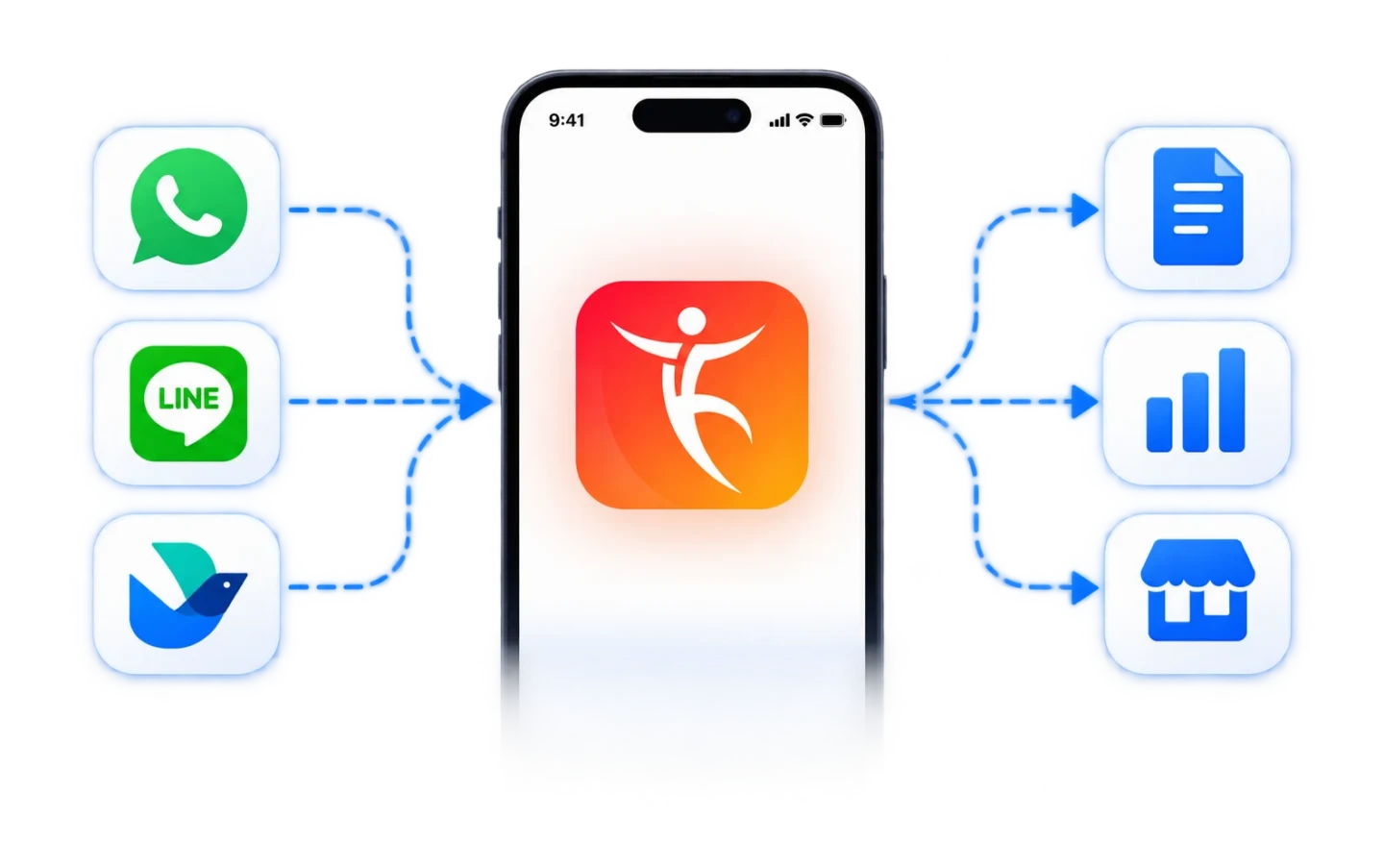
Multi-Platform Access
Connect tasks and business information through platforms like WhatsApp, making daily field work easier.
Bring sales, distributors, promotions, AI, analytics, and business operations together to create a complete end-to-end business loop.
Manage visits, customers, and territories in one workflow so sales teams can execute consistently and make better decisions.
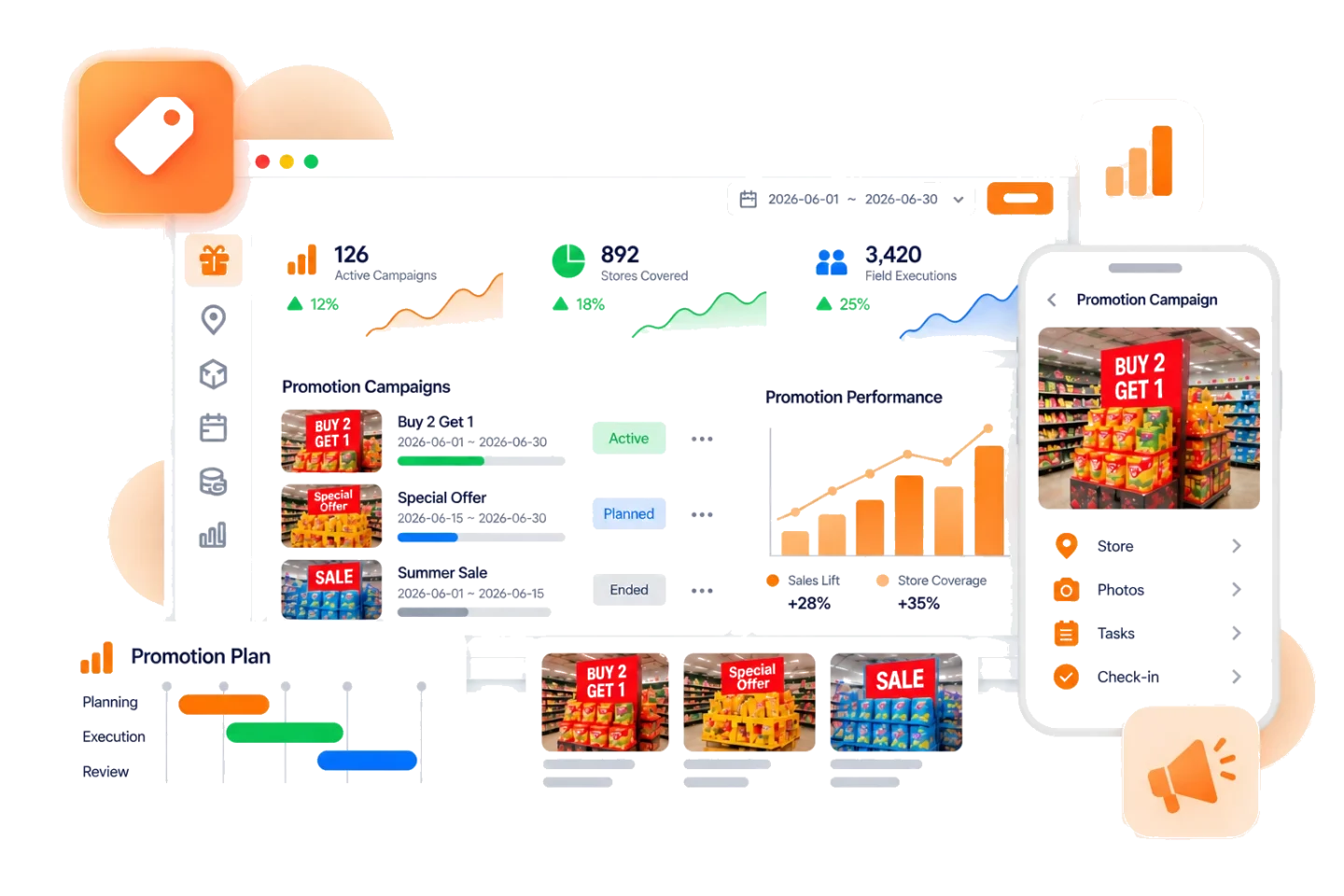
Standardize execution, streamline claims, and measure promotion performance to improve trade-spend efficiency.
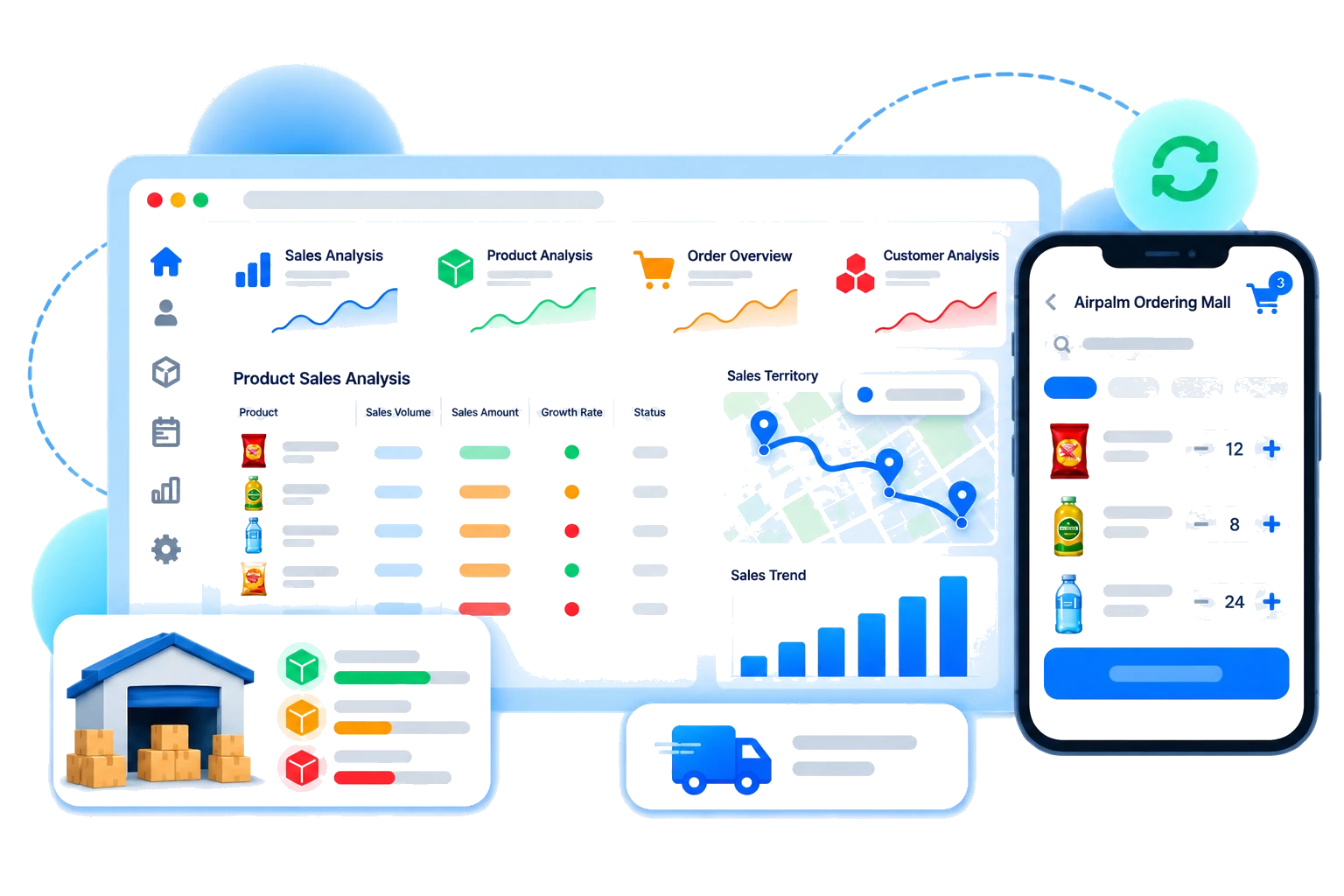
Connect manufacturers and distributors with shared data so orders move faster and inventory stays visible.
Use image recognition to verify products, displays, and shelf conditions automatically from field photos.
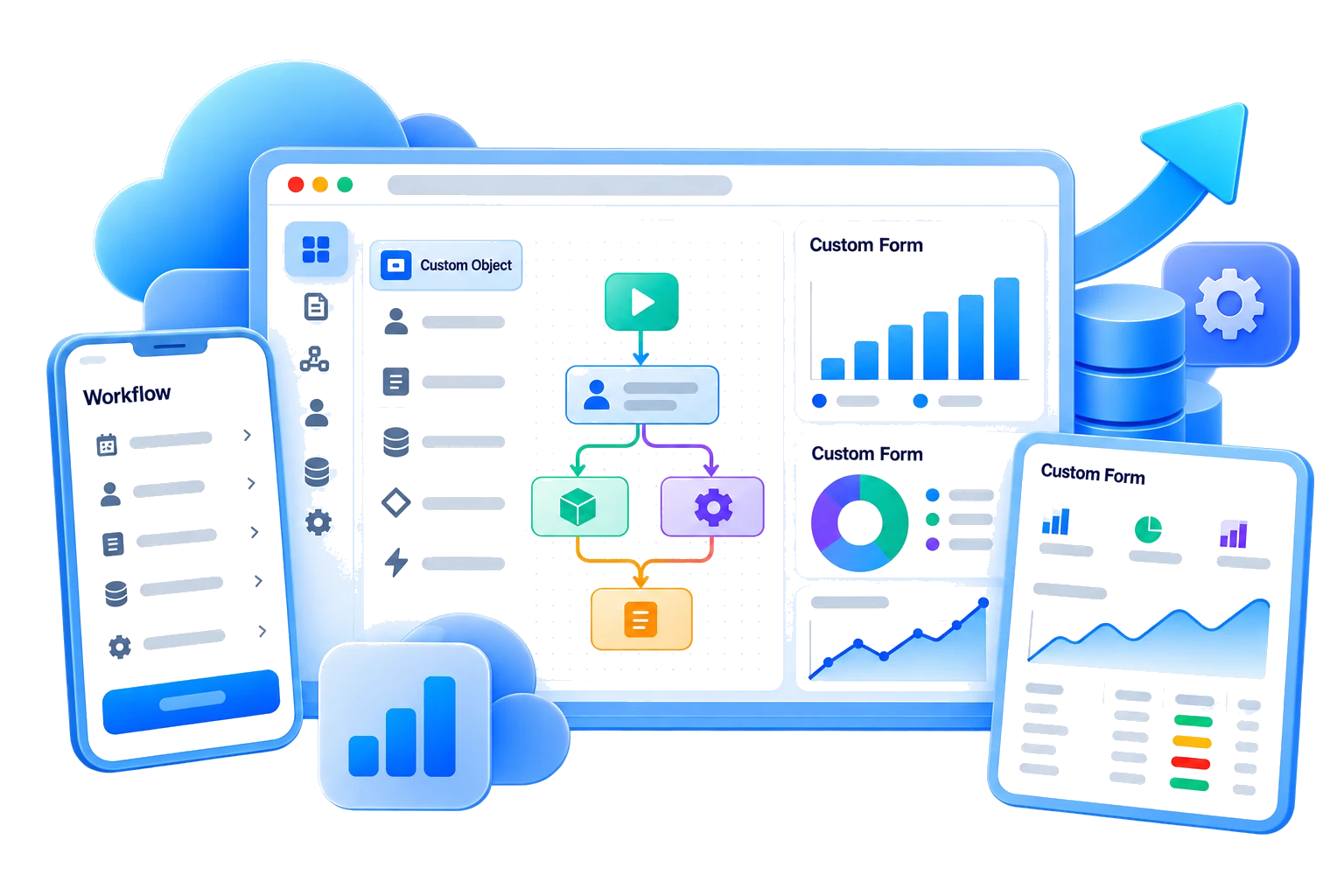
Use low-code tools to configure forms and processes, then turn business data into custom reports and dashboards.
Bring orders, customers, and financial data together to simplify daily operations and improve distributor efficiency.
From emerging teams to complex enterprises, Airpalm adapts to your scale, processes, and growth priorities.
Connect multi-tier distribution and in-store execution for more efficient channel growth.
Digitize outlets, field teams, trade spend, and orders to improve channel execution.
Connect key accounts and lower-tier markets to improve store coverage and omnichannel execution.
Connect channels and outlets for more visible, reliable, and controlled execution.
Improve channel and outlet execution across distribution, merchandising, and sales.
Connect sales and service workflows to improve enterprise selling and collaboration.
The results below are drawn from Qince customer projects. Applicability to your Airpalm rollout is confirmed during solution design.

For complex, multi-market operations
Airpalm helps large enterprises standardize execution across regions, teams, and channels while giving headquarters greater visibility and control.
PepsiSales & Market Development

For businesses scaling sales execution and market operations
Airpalm helps mid-sized businesses standardize field workflows, improve promotion execution, and scale faster with more consistent frontline operations.
A Mid-Sized Beauty & Personal Care CompanySales & Trade Marketing

For distributors building more efficient daily operations
Airpalm helps small business digitize sales, reconciliation, and business data to simplify daily operations and support faster decisions.
A Small Snack Food DistributorBusiness Owner
See how Airpalm can support your priority workflows and growth plans.
Clear answers to the most common questions businesses ask when evaluating CRM software.
Customer relationship management (CRM) software helps businesses organize customer data, sales activities, and interactions. For consumer goods companies, a channel-focused CRM can extend this foundation to field visits, outlets, distributors, promotions, orders, and retail execution.
CRM software centralizes customer information, records sales activities, supports follow-ups, and gives teams a shared view of relationships and opportunities. A consumer goods CRM can also connect outlets, field visits, distributors, promotions, orders, and retail execution.
A CRM system can improve customer visibility, standardize sales processes, reduce manual work, strengthen team collaboration, and provide better data for sales planning and management decisions.
CRM is the broader system for managing customer relationships and sales information. SFA focuses on automating sales activities such as visit planning, task execution, territory management, follow-ups, and performance tracking; it is often part of a CRM platform.
Start with your sales process and customer-management needs. Compare industry fit, usability, mobile capabilities, workflow configurability, reporting, integrations, data security, implementation support, and the platform's ability to grow with the business.
Implementation time depends on scope, users, data migration, integrations, and workflow complexity. A focused rollout may start with core teams and processes, while multi-market or highly integrated deployments usually require phased planning and delivery.